One of my personal autumnal delights here in the mountains is the bold revelation of Spindle, Euonymus europaeus that happens overnight and that literally takes my breath away.
Hidden in plain sight, Spindle spends most of the year quietly blending into the background, overshadowed by more celebrated neighbours like hawthorn, wild rose, dogwood, and sloe. Her life at the margins of hedgerows for the majority of the year is almost imperceptible. And then, in autumn, her striking presence is impossible to ignore!
Where once she was invisible, Spindle now commands attention – a vivid punctuation mark in the fading hedgerow.
Sensitivity is thus at the heart of discrimination. In the absence of discrimination, the world becomes an undifferentiated blur, boundaries dissolve, distinctions vanish, miscommunication reigns and structures collapse.
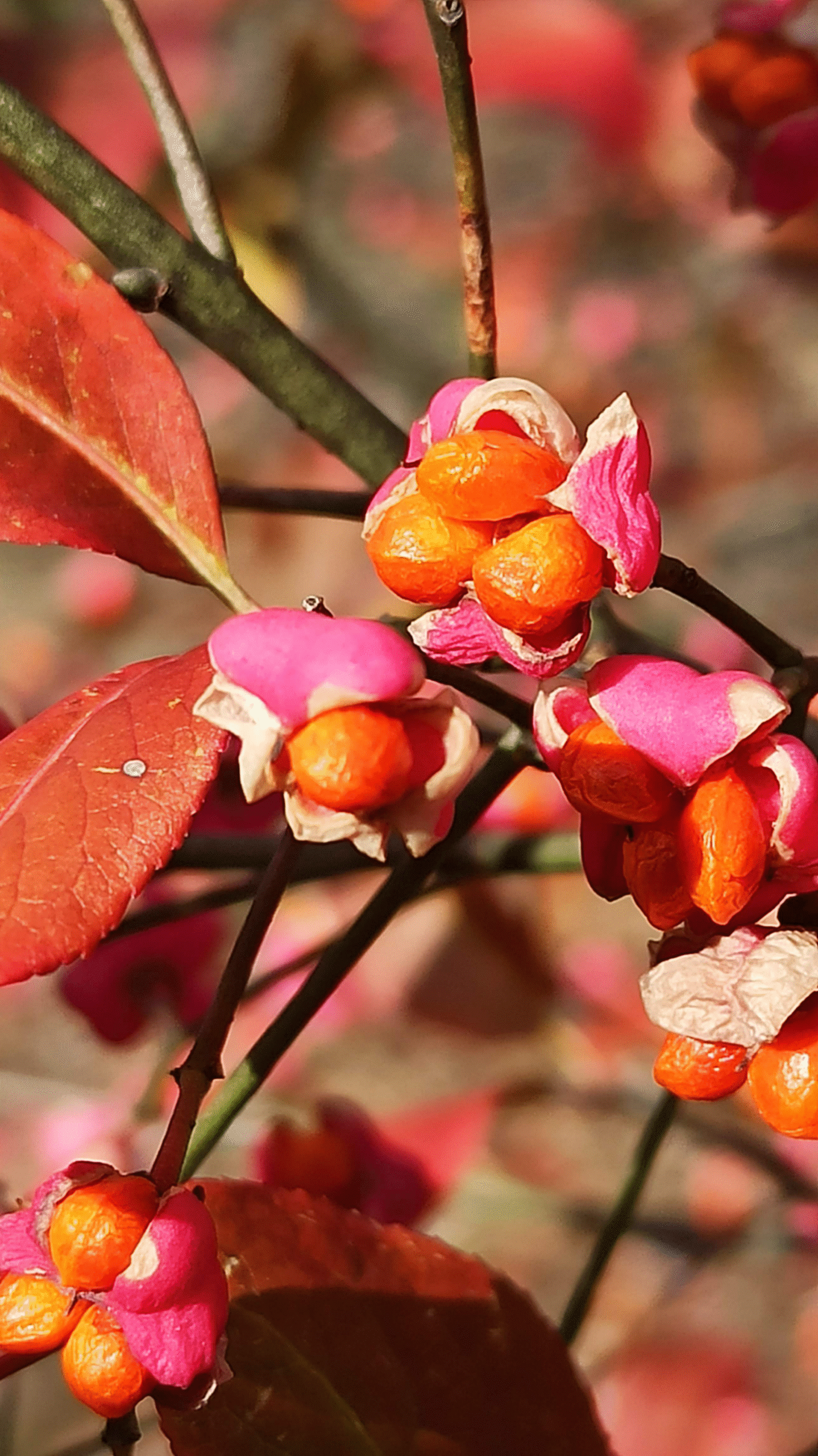
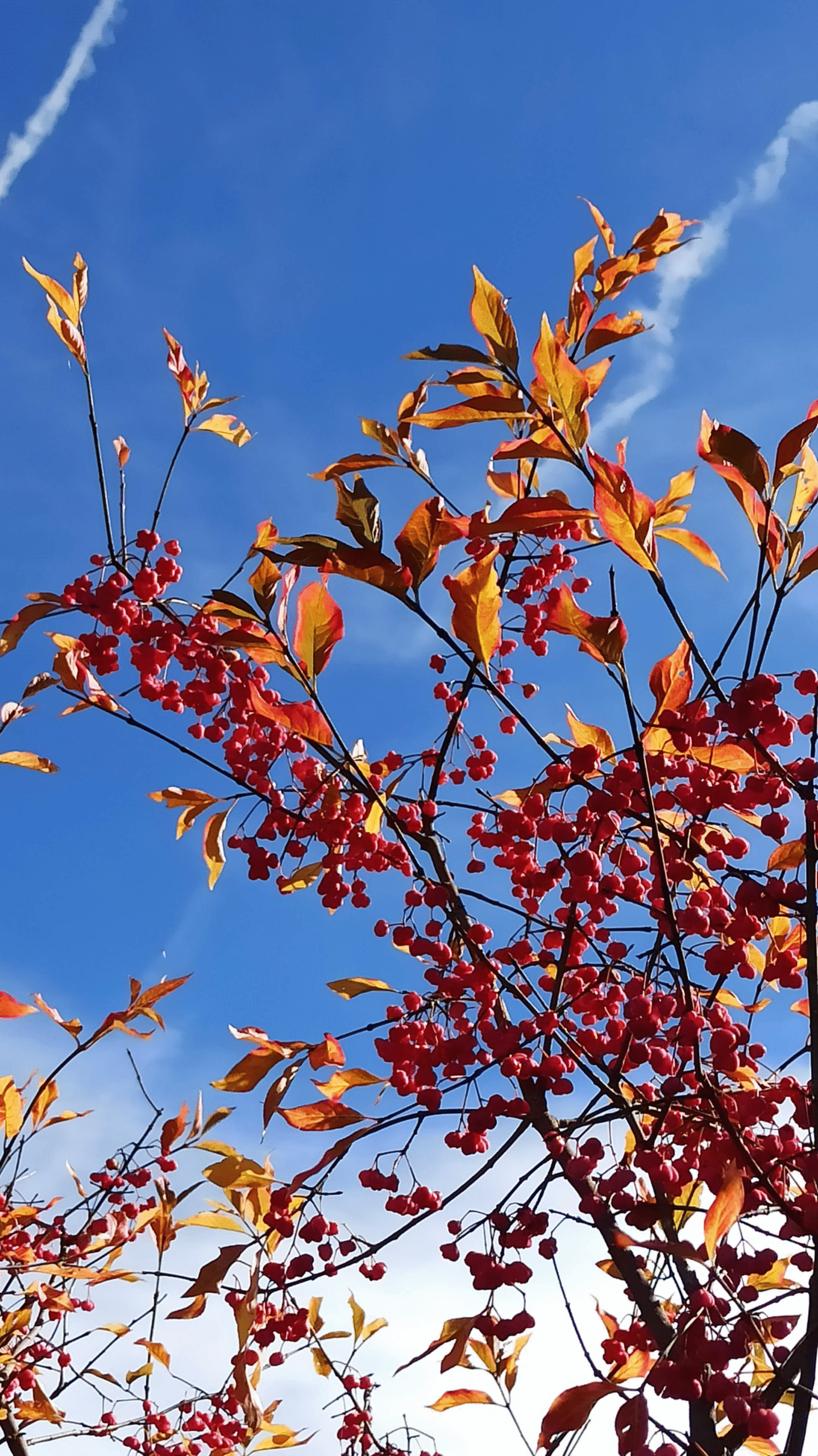
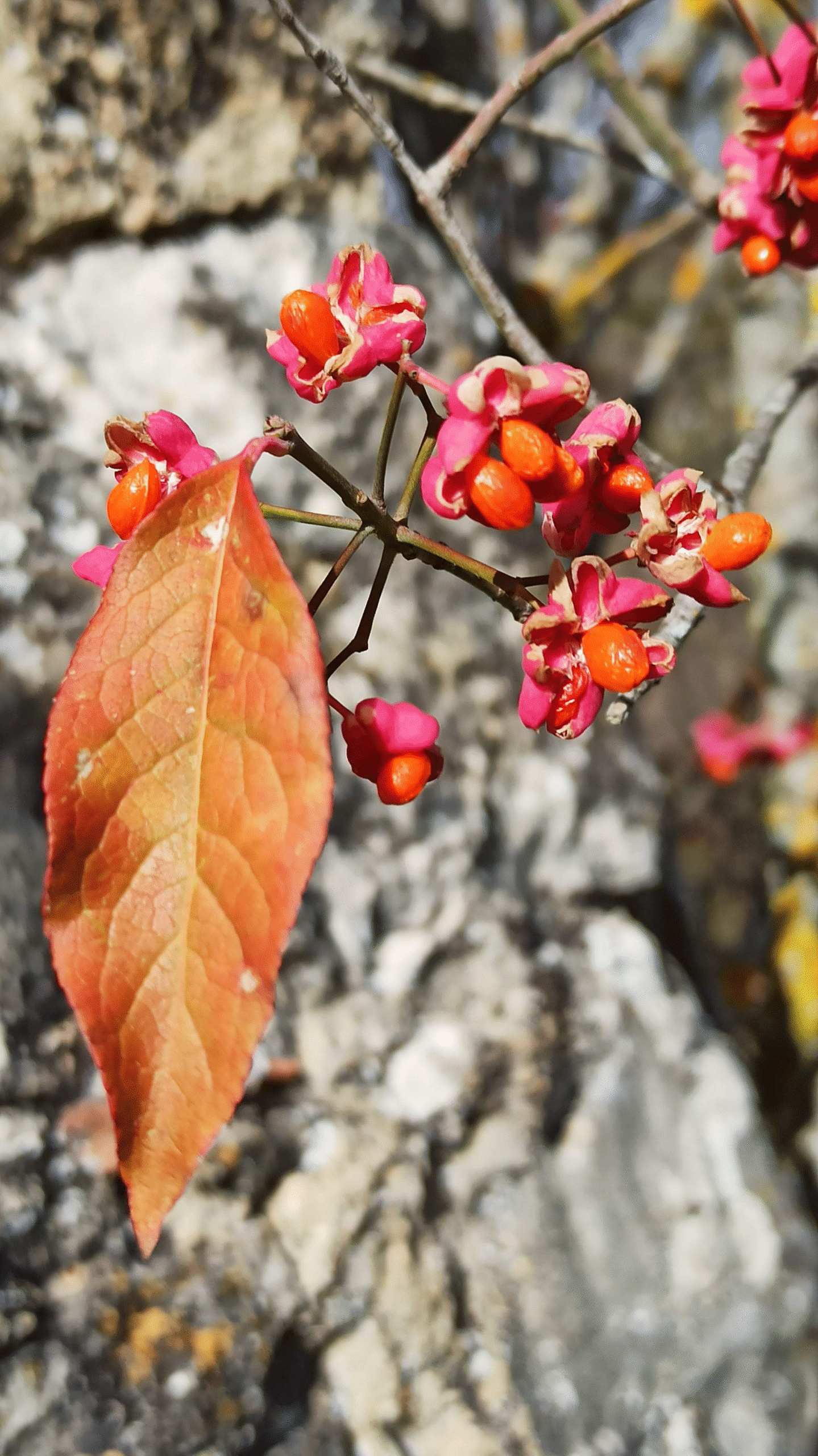
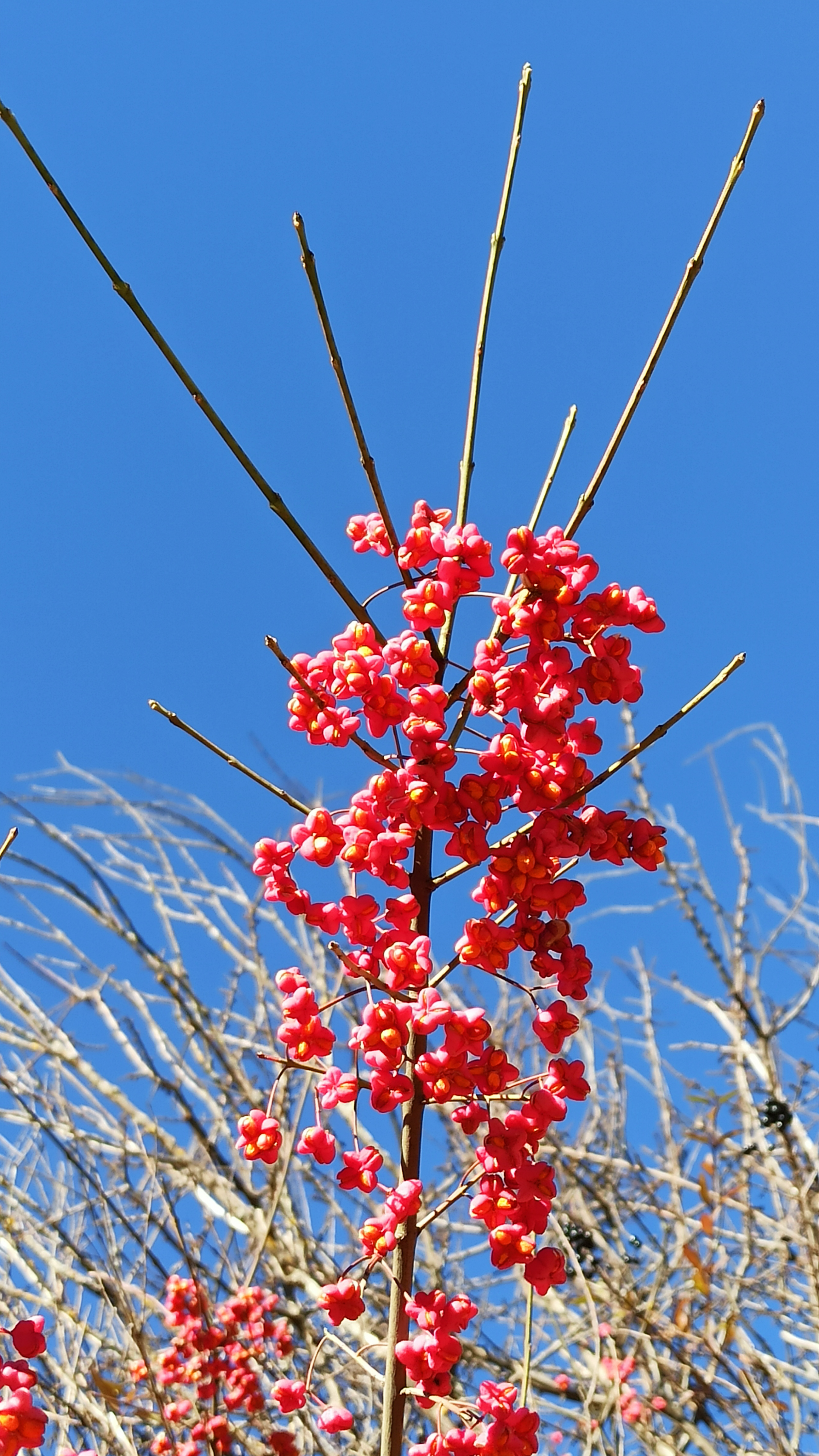
The seasonal metamorphosis of Spindle is itself a form of discrimination: a shift from anonymity to expression, from quiet integration to vivid individuation. Spindle reminds us that there is a time for blending in – and a time for standing apart.
Spindle also shows us the wisdom of selectivity that is both an invitation and a warning. Containing alkaloids and cardiac glycosides, her fruits are extremely toxic to humans and most mammals – a boundary clearly drawn in biochemical language: “I am not for you”. And yet, these very same fruits are harmless and nutritious to many birds in early winter. Thrushes and blackbirds devour the fleshy orange arils with relish and then disperse the seeds. To them, Spindle says: “I am here for you.”
This is Nature’s discrimination in action – an elegant reminder that healthy systems thrive not through indiscriminate openness, but through the intelligent and sensitive setting of boundaries.
Spindle also helps us practise the ability to delineate, to distinguish, and to define. Her pale, dense wood was historically carved into spindles (whence her name) for spinning wool – tools for dividing fibres and merging them into thread. It was also shaped into skewers, knitting needles, and toothpicks – implements of distinction and precision.
To this day, Spindle wood is prized by artists for charcoal. Her young twigs are straight and square sectioned and the smooth, even grain produces a quality charcoal that glides across the page, drawing crisp, clean lines – marks that separate light from dark, form from void.
Discrimination clairfies and defines but it can also exclude and diminish. Like any power, it must be used with sensitivity and wisdom. Did you know that Spindle herself has borne the brunt of negative discriminative practices? In the UK during the Second World War, she was actively removed from hedgerows because of her role as secondary host to Myzus persica, an aphid recognised as a pest of a range of crops like beet, potatoes and beans. The very shrub that once marked the boundary between wild and cultivated was judged, excluded and cast aside. This eradication practice was thankfully of short duration and Spindle endures, graciously and generously offering food and shelter to birds and still marking the turn of the seasons with her colourful leaves and blazing fruits.
Spindle invites us to notice differences, to pay attention to what we might otherwise ignore. Just as she stands out most vividly when the rest of the hedgerow fades, clarity, insight and understanding often emerge most clearly when we allow what is unnecessary to recede into the background.
- Her berries declare: “I am for some, but not for all and that is fine”.
- Her wood whispers: “refine, define and do not be afraid to draw the line”.
- Her autumn colours proclaim: “See me for who I truly am, in the moment, at my choosing”.
Spindle teaches us to value difference: to see diversity not as a threat, but as the source of beauty, resilience, and meaning. Discrimination in its deepest, most essential sense is not about division. It is about conscious discernment that leads to greater harmony through healthy boundaries.