Today I went into the forest to walk amongst the wild Primroses and to visit with their close woodland companions – the blue swathes of Hepatica triloba, also known as Liver Leaf or, less commonly, Trinity Herb. In the woodland clearings and margins of early spring, Hepatica suddenly appears, its blooms arriving before new leaf growth. Seeing them for the first time each year always brings a wave of emotion and today, when I visited, I had a strong sense of Revival – something that this delicate plant embodies so elegantly.
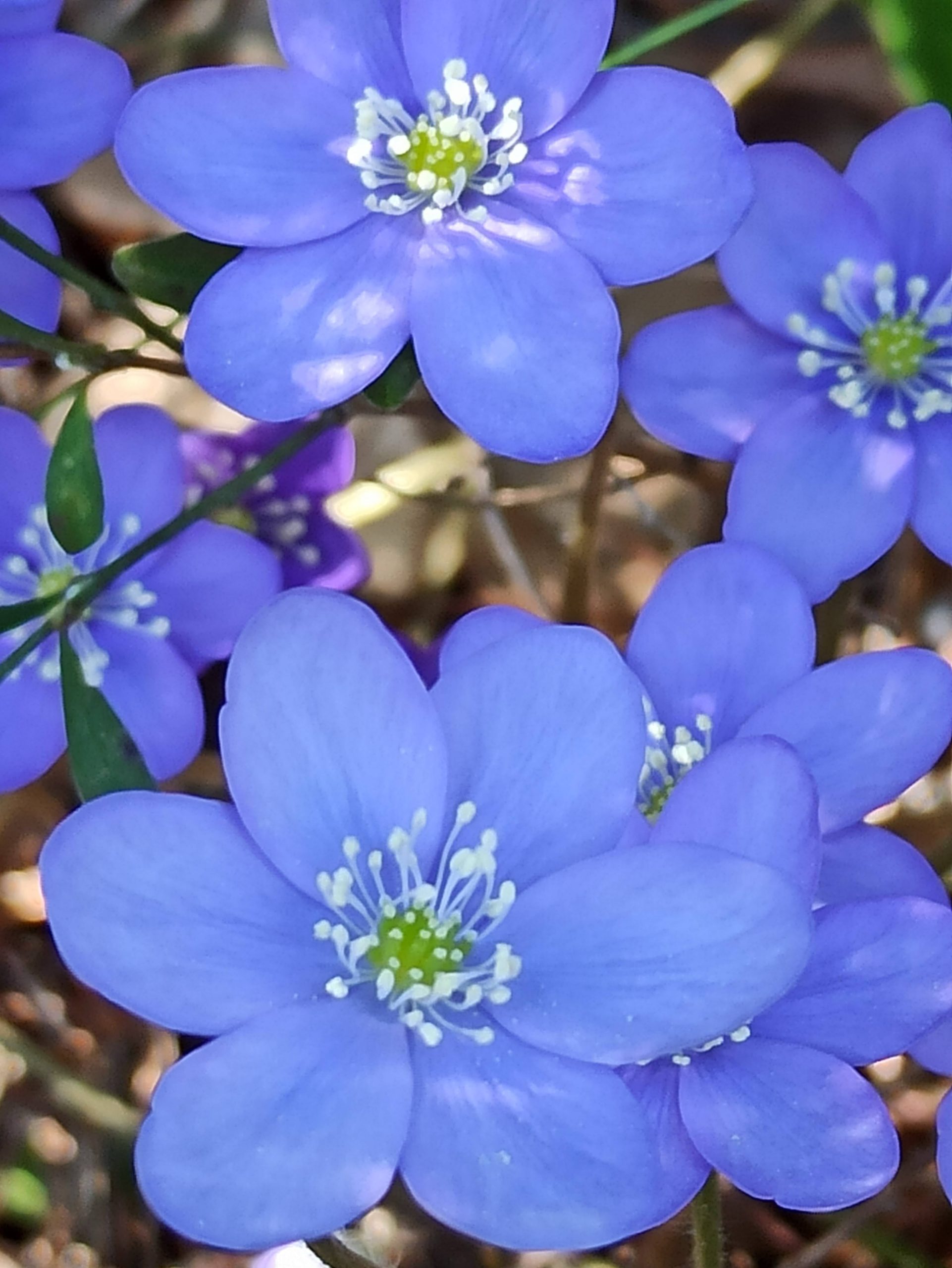
Together with Primroses and Hellebores, Hepatica triloba is one of our earliest woodland flowers. Long before the trees have leafed out and while winter’s debris still covers the forest floor, its small blooms emerge directly from amongst the brown and decaying leaves of the previous year. There is no gradual build-up to its emergence. One week the ground appears quiet and subdued; the next it is suddenly scattered with luminous flowers – violet, blue, or occasionally white that glow against the grey brown tones of winter’s remains.
It may be worth starting by saying that there is a distinct difference between Renewal and Revival, though the two are often employed as if they mean the same thing.
Renewal suggests a gradual process, a steady return to strength after rest or depletion. Renewal is measured, restorative, and usually quiet.
Revival, on the other hand, is something altogether different. Revival usually arrives suddenly. It is a stirring, a surging forth of energy that seems to rise from nowhere and everywhere at once. It is neither quiet nor cautious. It bursts forward with urgency, as though something dormant, buried or forgotten has finally found its voice and can no longer be contained.
Hepatica flowers before it unfurls new leaves. The energy of the plant is directed first toward flowering – toward expression, visibility, and presence, before the slower work of vegetative growth begins. In botanical terms, this early flowering is made possible by the plant’s overwintering rhizomes and evergreen leaves that store energy from the previous season.
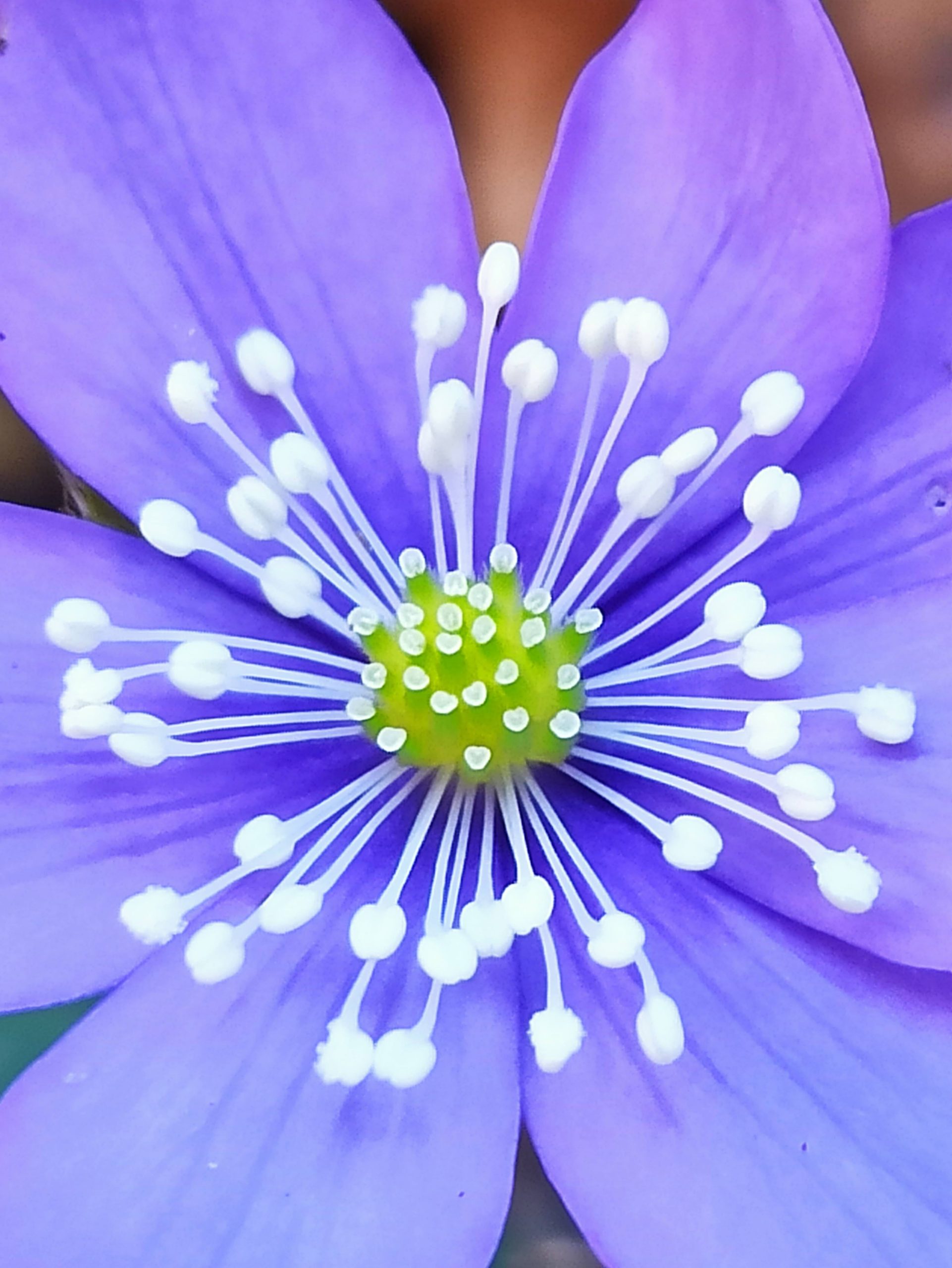
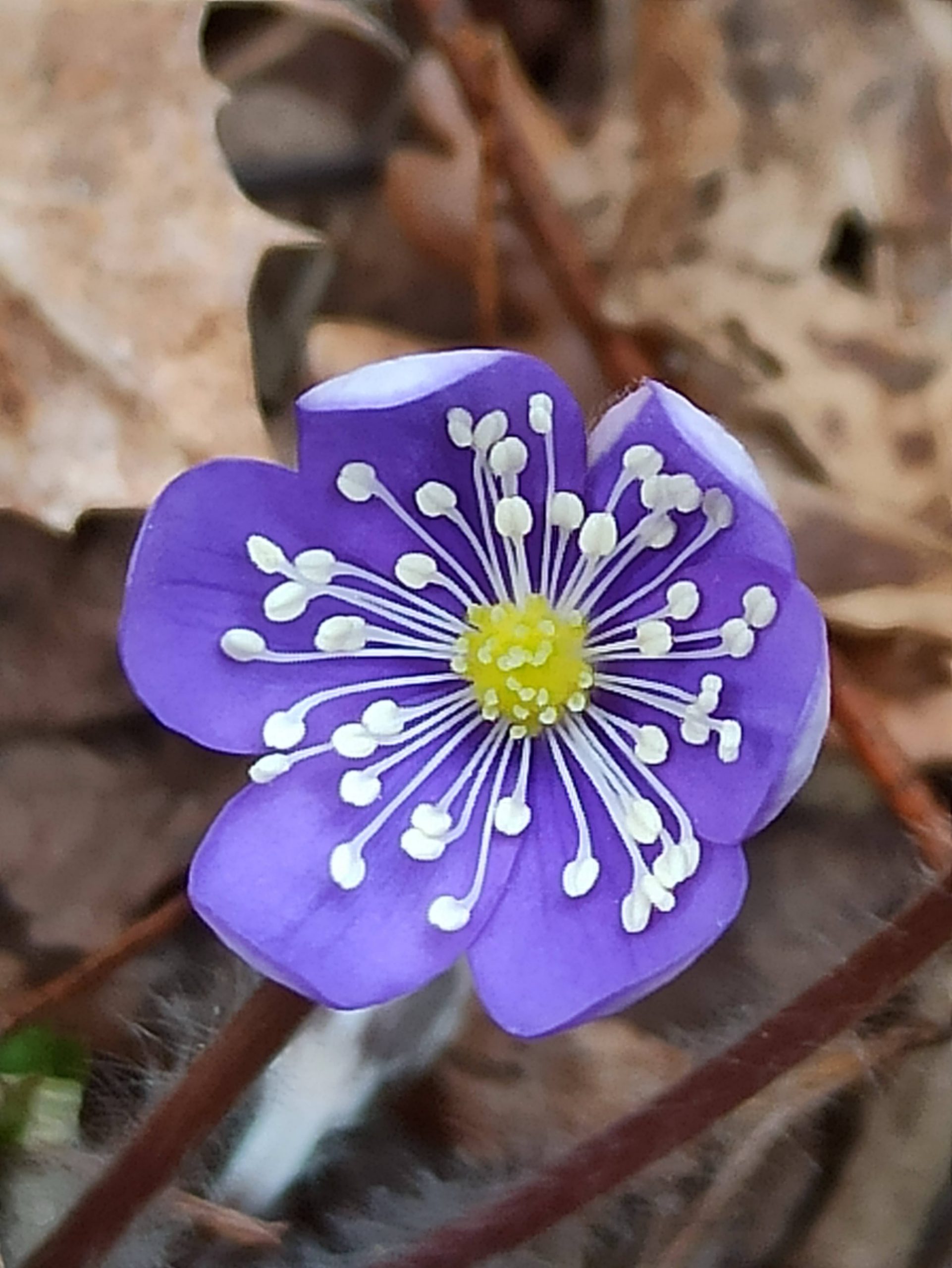
The structure of the flower itself mirrors a sense of Revival exuberance. At its centre sits a dense cluster of stamens arranged like a burst of light – a miniature sun radiating outward. The effect is one of movement and vitality, as though the flower is expressing a sudden exstatic surge of life after months of dormancy.
For me, Hepatica’s presence speaks to something deeper: Revival draws upon reserves we may not even realise we possess, those that were hidden, buried or long-forgotten. What is more, Hepatica’s flowering period is short-lived. Within a few weeks the blossoms will fade, and the woodland floor will be populated with blooms of other plants. And yet, during those brief, almost euphoric days, the forest sings Hepatica’s Revival song.
Hepatica rarely grows alone. Where conditions are favourable, entire colonies bloom together, suddenly transforming the woodland floor into a radiant tapestry of colour. Each flower is small, but collectively they create a striking display.
Revival looks like this: not a single quiet voice, but many voices rising together, caught in a collective wave of energy and mutual enlightenment.
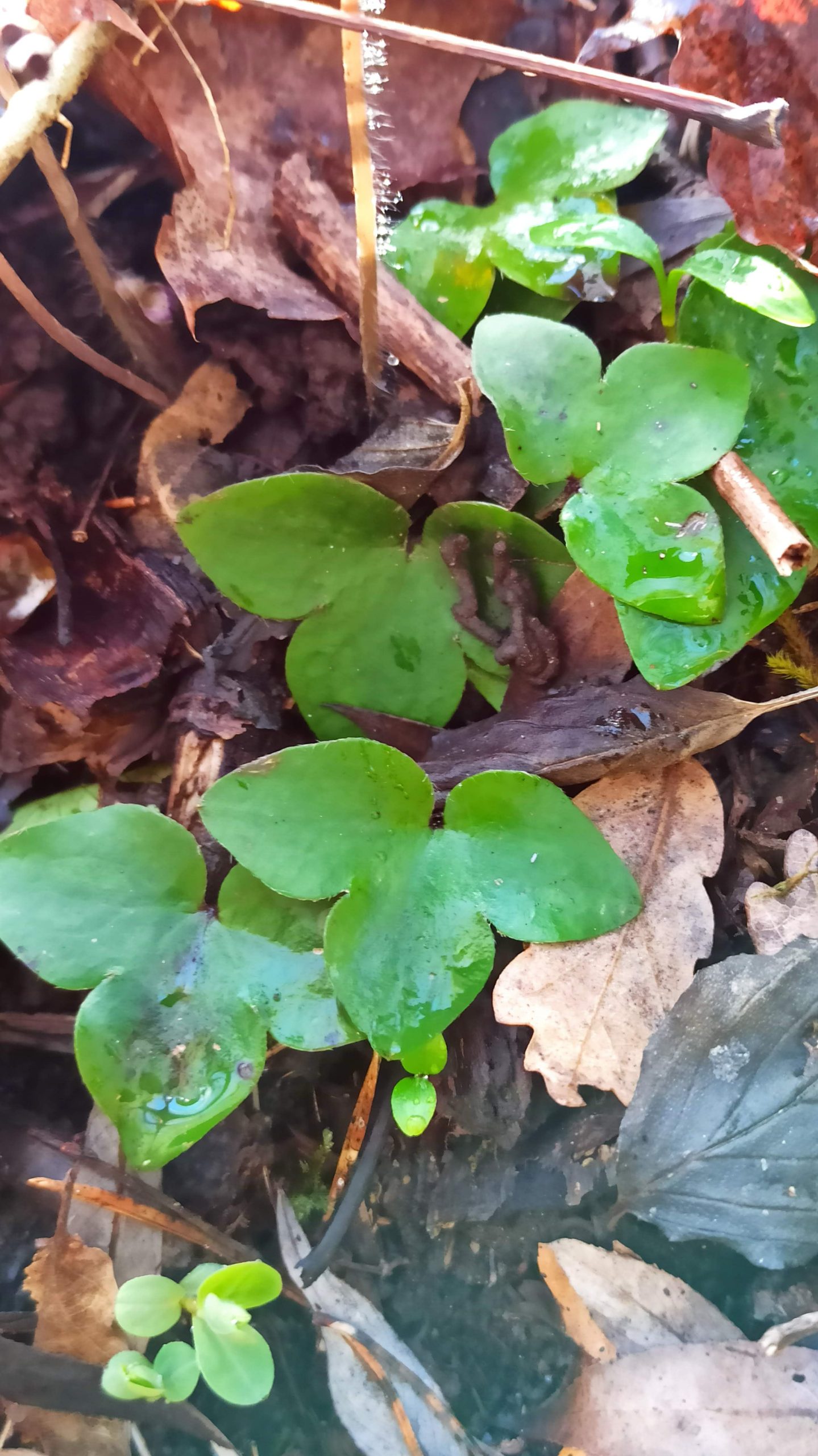

Hepatica’s leaves are distinctive, each divided into three rounded lobes. This feature gave rise to several of its traditional names, including Trinity Herb. In medieval Europe, the plant became associated with the Christian doctrine of the Holy Trinity – Father, Son and Holy Spirit – a symbolism reinforced by the tripartite shape of the leaf.
According to the Doctrine of Signatures, the leaf’s resemblance to the three lobes of the liver also suggested medicinal use for hepatic disorders, giving rise to the name Liver Leaf and to this day, in Homeopathy, Hepatica is used for hepatobiliary complaints.
While the theory of Liver Leaf being good for the liver has largely been set aside by modern science, the symbolism of Three remains interesting. In Hepatica, the tri-lobed leaf becomes a reminder that Revival often occurs at the convergence of three forces: inner readiness, external conditions and collective momentum.
The theme of Revival carries particular resonance in Welsh history – my own Welsh lineage attests to this. The Welsh Revival of 1904 -1905 was one of the most remarkable religious awakenings in modern European history. It was associated with the industrial communities of the South Wales valleys (from whence my family hails), where chapel life already formed the cultural and social centre of many coal mining towns.
During the time of the Welsh Revival, members of my own family were directly involved, with its epicentre being close to Aberdare, and spreading out to the Rhondda and beyond. It was a rapid, wave-like surge of spiritual awakening that profoundly affected Welsh society. Churches filled, social habits shifted, and communities experienced a renewed sense of moral and spiritual direction. Around 100,000 people were reported to have joined churches in South Wales during this shortlived but powerful period. The Revival was characterised by spontaneous gatherings, collective singing, emotional intensity and a renewed sense of community and spiritual purpose.
The Revival revealed something unique about Welsh society: a culture where language, poetry, music and faith were inseparable and where communal singing could become a powerful expression of shared spiritual experience. It went on to influence wider global religious movements, contributing to the emergence of early Pentecostalism in the following years.
Among those deeply connected to that era was a family member: Thomas Elvet Lewis, a non-conformist minister and bard whose words and ministry carried the spirit of Welsh cultural and spiritual identity. Many ministers of the time were also poets and cultural leaders. Known by his bardic name, Elfed, he later went on to become Archdruid of the National Eisteddfod of Wales from 1926 to 1939. Figures such as Elfed represented the close connection between Welsh religious life, poetry and national identity. He served as a Calvinistic Methodist minister in Aberdare and participated in the religious culture surrounding the Revival period.
Although not a primary Revival leader, Elfed was part of the intellectual and spiritual environment that shaped Welsh Nonconformist life during this landmark time. His life illustrates the close relationship between Welsh religious life and literary culture. Elfed was my great grandfather.
Like the flowering of Hepatica, the Welsh Revival was intense, radiant and short-lived. Yet its influence extended far beyond its immediate duration. Revival does not need to last long to change the direction of what follows.
So Hepatica may be offering us a powerful lesson.
In life we often feel the impulse or urge to act, create, or speak – yet we often hesitate, waiting until conditions are more sure and secure. Revival suggests another possibility: that sometimes the moment itself carries the energy we need, especially when the energy is collective.
Even if it begins with a single voice, its very expression invites others to join. When something within us begins to stir – an idea, a calling, a movement toward healing or community, perhaps the invitation is to simply to respond and participate. Revival is not limited to personal inspiration but represents a shared awakening – a moment when something far larger than any one individual begins to move through a community.
Just as the woodland floor covered in Hepatica’s blooms resembles a community choir participating in a collective resurgence, with hundreds of their small voices rising together after winter’s long silence, sometimes the most important thing we can do is join the chorus.
Long after the song has been sung, something will have changed, leaving us all with an indelible legacy to build upon.